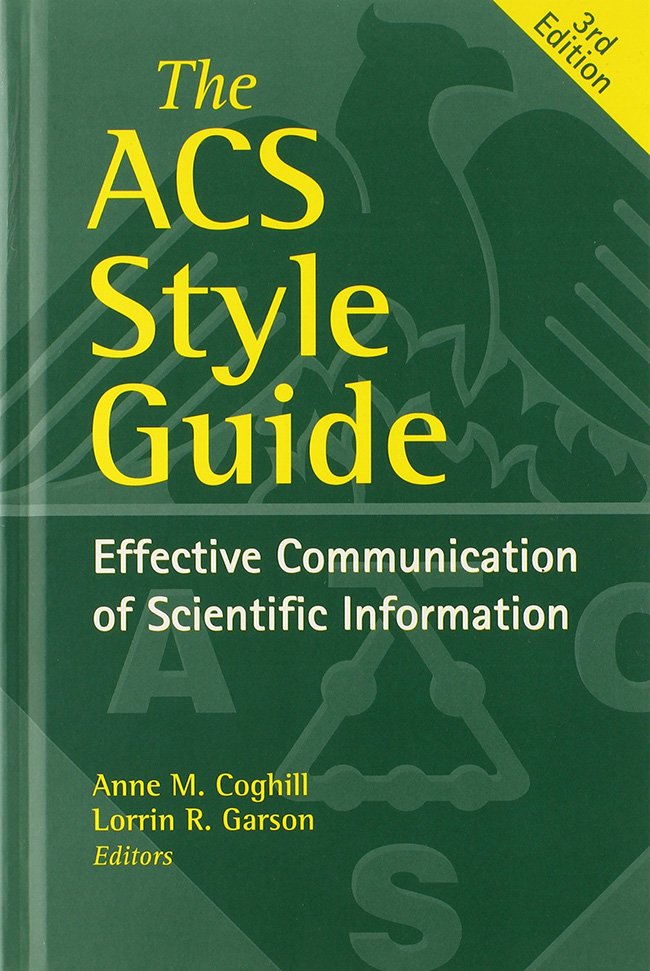
In the demanding world of chemistry, precision is paramount—not just in the lab, but also on the page. From experimental reports to groundbreaking journal articles, presenting your work with impeccable sourcing is non-negotiable. This is where ACS Referencing Tools and Software become your most valuable allies, transforming a potentially painstaking task into a streamlined process. Forget late-night battles with style guides; the right digital assistant can make your citations flawless, leaving you more time for actual chemistry.
Before we dive into the specifics, here's a quick look at what we'll cover:
At a Glance: Mastering ACS Referencing Digitally
- ACS Style Demystified: Understand the core purpose and structure of American Chemical Society referencing.
- The Power of Automation: Discover how digital tools drastically cut down citation errors and time.
- Your Digital Toolkit: Explore various software, from simple generators to robust reference managers.
- Picking Your Partner: Learn what to look for when choosing the best tool for your workflow.
- Best Practices: Strategies to ensure your ACS citations are always accurate and consistent.
- Avoiding Pitfalls: Common mistakes and how smart tool usage helps you sidestep them.
Decoding ACS Referencing: A Quick Primer for the Chemist
Let's be honest: no one gets into chemistry because they love formatting bibliographies. Yet, mastering the ACS citation style is crucial for any student or professional in the field. Developed specifically for chemical sciences, the American Chemical Society (ACS) style defines a comprehensive set of rules and guidelines. These aren't just about how to list a journal article; they cover everything from grammar and punctuation to units of measure, peer review processes, and, of course, the precise construction of reference lists and in-text citations. It's designed to be convenient, practical, and universally understood within the chemical community.
Who uses it? Primarily, chemistry students and academics. If you're writing a thesis, a lab report, or aiming for publication in an ACS journal, adhering to this style is a fundamental requirement. It ensures clarity, credibility, and allows your readers to easily locate your sources, which is the bedrock of scientific discourse.
ACS referencing itself has two main components:
- In-text Citations: These are your quick nods to a source directly within your writing. ACS offers flexibility here, allowing for:
- Superscript numbers:
...as observed in previous studies.^1 - Italic numbers in parentheses:
...this phenomenon (2) warrants further investigation. - Author-date system:
...similar results were reported (Smith, 2022) in analogous experiments.
- Full Reference List: This is your comprehensive bibliography at the end of your document. It provides all the necessary bibliographic information for every source you've cited, allowing readers to find the original material. Common requirements include the author's name, title of the work, publication date, publisher, and place of publication, with specific formats varying based on whether it's a journal article, book, website, or patent.
Understanding these basics is the first step. The next is realizing you don't have to tackle the meticulous formatting alone.
The Modern Lab Assistant: Why ACS Referencing Tools Are Indispensable
Imagine running a complex chemical reaction, only to realize you forgot a crucial safety step because you were distracted by manually formatting footnotes. That's the real-world equivalent of the mental drain ACS referencing can cause without the right tools. The manual process is notoriously time-consuming and prone to error, especially when juggling multiple source types and the subtle nuances of ACS guidelines.
Here's why these digital tools aren't just convenient, they're essential:
- Unrivaled Accuracy: Human error is inevitable. A misplaced comma, an incorrect abbreviation, or a slight deviation from the specified order can compromise your reference list. Software, when used correctly, eliminates these mistakes, ensuring every citation meets ACS standards.
- Massive Time Savings: Think about the hours spent cross-referencing a style guide, typing out details, and reformatting. Citation generators can produce a perfectly formatted entry in seconds.
- Consistency Across Your Work: Whether you're writing a single paper or managing multiple projects, tools maintain uniform formatting, which is critical for scientific credibility.
- Simplified Source Management: For long-term projects or prolific researchers, keeping track of dozens or hundreds of sources manually is a nightmare. Digital tools create organized libraries of your research.
- Focus on the Science: Ultimately, these tools free up your cognitive load. Instead of worrying about italics or parentheses, you can dedicate your mental energy to the actual content and analysis of your chemical research.
In an era where scientific output is increasingly collaborative and fast-paced, relying on digital solutions isn't just a luxury—it's a fundamental part of efficient and accurate academic practice.
Your Toolkit for Flawless ACS Citations
The landscape of ACS referencing tools and software offers a range of options, each designed to address different needs and workflows. Let's explore the main categories.
1. ACS Citation Generators: The Quick & Easy Solution
At their core, an ACS citation generator is an online tool that automatically creates citations in the American Chemical Society (ACS) style. It's your go-to for quickly producing individual references without needing to consult a bulky style guide.
How they work: These tools leverage powerful databases. You simply input a key identifier for your source—a URL for a website, an ISBN for a book, or an ISSN for a journal article—and the generator pulls the relevant publication details. It then processes this information and formats it according to ACS guidelines.
Using a generator is straightforward:
- Search for your source: Type in the article title, book ISBN, or paste the URL of a website.
- Select and verify: The tool will present a list of potential matches. Choose the correct one and, crucially, verify or edit any details. Sometimes, auto-filled information might be incomplete or slightly off.
- Generate: Click the "Generate" button, and your perfectly formatted ACS citation is ready to copy and paste.
These generators are fantastic for one-off citations or when you need to quickly generate ACS references for a short assignment. They handle the nuanced requirements for different source types, ensuring everything from author names to page numbers is correctly positioned and punctuated.
2. Reference Managers with ACS Support: Building Your Research Library
For anyone beyond a single paper—think theses, dissertations, or ongoing research projects—dedicated reference management software is a game-changer. These tools go far beyond simply generating a single citation; they help you build, organize, and manage an entire library of your research sources.
Key Features:
- Centralized Library: Store all your references (journal articles, books, websites, etc.) in one searchable database.
- Annotation & Notes: Attach notes, highlights, and PDFs directly to your references.
- Cite-While-You-Write: Integrate directly with word processors (like Microsoft Word or Google Docs), allowing you to insert in-text citations and generate a bibliography on the fly. As you add or remove citations, the list automatically updates.
- Collaboration: Many platforms allow teams to share reference libraries, fostering collaborative research and ensuring consistent referencing across group projects.
- Multiple Styles: Easily switch between ACS and hundreds of other citation styles, a lifesaver if you publish in different fields or journals.
Popular examples include Zotero, Mendeley, and EndNote, each with its own strengths in terms of interface, features, and community support. While some offer free tiers, premium versions often unlock advanced features essential for professional academics.
3. Proofreading & Editing Software (Specialized for Citations): The Final Polish
Even with generators and reference managers, human review is always the final arbiter of quality. However, specialized proofreading tools can offer an additional layer of scrutiny specifically for citations. These aren't typically standalone ACS tools, but rather general academic editing software with citation-checking capabilities.
How they add value:
- Consistency Checks: They can flag inconsistencies in date formats, author names, or even specific ACS abbreviations that might slip past a quick human scan.
- Missing Information: Some can identify if a required component of a citation (e.g., a volume number for a journal) is missing, prompting you to double-check.
- Adherence to Style: While not always perfect, some tools have built-in style guides that can highlight potential deviations from ACS norms.
Think of these as an extra set of digital eyes, helping catch subtle errors that even experienced researchers might overlook. They complement, rather than replace, your primary citation tools.
Choosing Your Digital Lab Partner: What to Look For
With several options available, selecting the right ACS referencing tool means considering your specific needs, workflow, and budget. Here’s a checklist to guide your decision:
- Accuracy and Updates: This is paramount. Does the tool frequently update its ACS style rules to reflect the latest editions? Look for providers with a strong reputation for accuracy. Read reviews or test a few sources yourself.
- Ease of Use (UI/UX): A clunky interface will negate any time savings. Opt for software with an intuitive design, clear instructions, and a straightforward workflow. You should be able to get a citation in a few clicks.
- Source Compatibility: Can the tool handle all the types of sources you commonly use—journal articles, books, websites, conference proceedings, patents, technical reports, and even less common ones? Ensure it supports your research breadth.
- Integration with Writing Tools: If you primarily use Microsoft Word, Google Docs, or LaTeX, check for seamless "cite-while-you-write" integration. This is a huge productivity booster.
- Cost vs. Features: Many basic citation generators are free. Reference managers often have free tiers with limitations or offer premium subscriptions. Weigh the cost against the advanced features you genuinely need (e.g., large storage, collaboration, advanced PDF annotation).
- Customer Support & Community: If you run into issues, how easy is it to get help? Look for tools with good documentation, active user forums, or responsive customer support.
- Offline Access: Do you need to work offline? Some web-based tools require an internet connection, while desktop applications offer greater flexibility.
Take advantage of free trials where available. Test the tool with a few of your own tricky sources to see how well it performs. The best tool is the one that fits seamlessly into your research process.
Mastering Your Workflow: Best Practices with ACS Tools
Having the right tools is only half the battle; knowing how to use them effectively is the other. Here are some best practices to ensure your ACS referencing is consistently top-notch:
- Start Early, Cite Often: Don't wait until the end of your writing process to add citations. As soon as you consult a source, add it to your reference manager or generate its citation. This prevents "citation panic" later on.
- Verify, Verify, Verify: Even the most sophisticated tools aren't infallible. Automated data retrieval can sometimes be incomplete or incorrect. Always cross-reference the generated citation against the original source and, if possible, the latest ACS style guide (or a reliable summary) for accuracy. Pay special attention to:
- Author names and initials
- Publication year
- Journal titles (abbreviations)
- Volume and page numbers
- DOI/URL for online sources
- Understand the "Why" Behind the "What": While tools handle the formatting, having a basic understanding of ACS principles helps you spot errors or make informed decisions when a source is ambiguous. Knowing why something is formatted a certain way empowers you to use your tools more intelligently.
- Keep Your Software Updated: Developers frequently release updates to fix bugs, add new features, and ensure compliance with the latest style guide revisions. Regularly updating your reference manager or checking for generator updates is crucial for ongoing accuracy.
- Back Up Your Reference Library: If you're using a desktop reference manager, ensure your library is regularly backed up, ideally to a cloud service. Losing your meticulously curated database of sources would be a significant setback.
- Use Consistent Input: When adding sources manually (e.g., for niche sources not found by automated search), ensure you're consistent with how you enter information into your reference manager. This prevents inconsistencies in the output.
By adopting these practices, you'll not only save time but also cultivate a reputation for meticulous and trustworthy scientific communication.
Common Hurdles and How to Clear Them
Even with excellent tools, researchers sometimes encounter specific challenges. Knowing these common pitfalls can help you navigate them effectively.
Misconception: "Generators are always 100% accurate."
The Reality: While highly reliable, automated tools are not flawless. They rely on the quality of metadata available in online databases. If a journal article's metadata is incomplete or incorrectly tagged, the generator's output will reflect those imperfections.
How to Clear It: Human review is always the final, non-negotiable step. Treat the generator as a powerful assistant, not a fully autonomous robot. Always double-check the generated citation against the original source.
Issue: Handling Unusual Source Types
The Reality: Most tools excel at common sources like journal articles, books, and websites. However, you might encounter less conventional sources:
- Proprietary company reports
- Personal communications
- Specific types of patent documents
- Unique historical documents or archives
How to Clear It:
- Consult the ACS Style Guide: For truly unusual sources, the official ACS Style Guide is your ultimate authority. It provides specific templates and guidance for almost every conceivable source type.
- Manual Entry in Reference Managers: If a source isn't recognized by a generator, use your reference manager's manual entry option. This allows you to input all details correctly according to the style guide, and the manager will still format it for you.
- Analogies: If a very specific type of source isn't covered, find the most similar source type in the guide and adapt its format, making a note of any deviations for transparency.
Issue: Maintaining Consistency Across Collaborators
The Reality: In group projects, different team members might use different tools or methods, leading to inconsistencies in the final reference list (e.g., slight variations in journal abbreviations, date formats).
How to Clear It:
- Agree on a Single Tool/Method: Before starting, the team should collectively decide on a primary reference manager or citation generator.
- Share a Reference Library: Utilize the collaborative features of reference managers (like Mendeley or Zotero Group Libraries) to ensure everyone is pulling from the same source pool and using consistent entries.
- Designate a "Citation Manager": For larger projects, one team member might be responsible for a final review of all citations to ensure uniformity.
- Clear Communication: Establish clear guidelines for how new sources should be added and verified within the shared system.
Addressing these issues proactively will ensure your research maintains its academic integrity and professional polish.
Putting It All Together: Your Path to Seamless ACS Referencing
In the demanding landscape of chemical research, your scientific contributions deserve to be presented with the utmost clarity and credibility. ACS Referencing Tools and Software are not just conveniences; they are essential components of a robust and efficient research workflow. They streamline the tedious, minimize errors, and free up your valuable time, allowing you to focus on the science that truly matters.
By understanding the different types of tools available—from quick citation generators to comprehensive reference managers—and by adopting best practices for their use, you can transform the often-dreaded task of referencing into a smooth and reliable process. Remember to always apply a critical eye, using these tools as smart assistants that enhance your work, rather than replacements for your understanding.
Embrace these digital allies. Master their use. And present your chemical insights with the confidence that every single source is attributed flawlessly, reflecting the precision and rigor inherent in your scientific pursuit.