Let's face it: navigating the labyrinthine rules of academic citation can be a significant hurdle, especially when your focus should be on groundbreaking chemical research. For those operating within the rigorous world of chemistry, mastering the American Chemical Society (ACS) style is non-negotiable, and it's notoriously precise. The good news? You don't have to tackle it alone. The best ACS reference generators are here to transform a painstaking, error-prone task into a seamless part of your writing process, saving you countless hours and the headache of misplaced commas or incorrect abbreviations.
These digital tools act as your personal citation assistant, taking the raw details of your sources – a URL, an ISBN, or even just a few keywords – and meticulously formatting them into perfect ACS-style citations. Whether you're a student slogging through your first lab report or a seasoned researcher prepping a manuscript for an ACS journal, leveraging these generators isn't just a convenience; it's a strategic move to boost accuracy and efficiency.
At a Glance: Your Quick Guide to ACS Reference Generators
- What they are: Online tools that automatically format citations into ACS style.
- Why use them: Save time, reduce errors, ensure compliance with ACS guidelines.
- How they work: You input source details (e.g., ISBN, URL), and the tool generates the formatted citation.
- Key features to look for: Accuracy, ease of use, support for various source types, and free access.
- Top picks: MyBib and BibGuru are noted for their user-friendliness and effectiveness.
- Always remember: Even the best generators require a quick human review to catch edge cases.
The Unseen Challenge: Navigating ACS Citation Style
Imagine dedicating weeks, months, or even years to a complex chemical experiment. You meticulously record data, analyze results, and craft compelling arguments. Then comes the bibliography – a critical component that, if not handled perfectly, can undermine the credibility of your entire work. This is where the American Chemical Society (ACS) style steps in, providing a standardized framework for academic writing in chemistry.
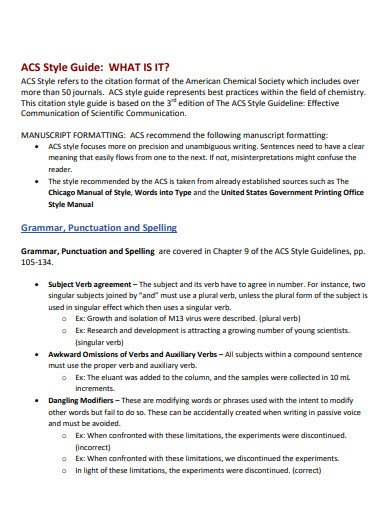
The ACS style guide, particularly the comprehensive 3rd edition from 2006 (and its updated 2020 online counterpart), dictates everything from grammar and punctuation to the precise structure of your reference list. It's designed to ensure clarity, consistency, and easy traceability of sources within chemistry-related fields and ACS publications. While its rigor is essential for scientific integrity, its granular rules – differing significantly from APA or MLA – can be a significant source of frustration.
From how author names are abbreviated and ordered to the specific italicization of journal titles and the placement of volume and page numbers, every detail matters. Without a helping hand, manually crafting these citations is ripe for small, yet critical, errors that can delay publication or impact your grade.
ACS Style Fundamentals: A Quick Overview
Before we dive into how generators simplify things, it's helpful to grasp the core elements of ACS style. Understanding these basics allows you to better vet the output of any generator and appreciate its power.
ACS utilizes two primary systems for in-text citations:
Numbered System
This is arguably the most common in chemistry.
- Superscript Numbers: You'll see these appearing outside punctuation, like this^(1), when referring to a whole sentence or clause.
- Italic Numbers in Parentheses: Alternatively, on the line of text, inside punctuation: (2).
- Consecutive Numbering: References are numbered starting from 1 and continue consecutively throughout your entire document – text, tables, and figures included. If you cite the same source multiple times, it retains its original number.
- Multiple References: Cite in increasing order, separated by commas (e.g., (1, 3-5)).
Example In-text (Numbered):
Leach (1) stated that... or ...was observed^(2).
Author-Date System
Less frequently used in some sub-disciplines but still an option.
- Parenthetical Citation: The author's last name and year of publication appear in parentheses (e.g., (Watson, 2018)).
- Narrative Citation: If the author's name is part of your sentence, only the year is placed in parentheses (e.g., Rode (2012) claims...).
Author Naming Conventions (In-Text)
- Two Authors: Both names joined by "and" (e.g., Smith and Jones (2020)).
- More Than Two Authors: Use only the first author's last name followed by "et al." (no comma before "et al.", but a period after "al.") (e.g., (Chang et al., 2019)).
The Reference List: Your Full Source Compendium
This crucial section appears at the end of your paper. Its order depends on your in-text system:
- Numbered System: References are listed in numerical order, corresponding to their first appearance in the text.
- Author-Date System: References are listed alphabetically by the first author's last name.
Minimum Data Requirements:
Generators excel at ensuring you capture these: - Journal Articles: Author names, abbreviated journal title, year, volume number, and initial page (complete span is preferred).
- Books: Author/editor names, book title, publisher, city of publication, year.
- Other Materials: Sufficient detail for identification and location (e.g., URL for websites).
Formatting Rules for Reference List Entries: - Every reference ends with a period.
- Use only initials for authors' given names, with full stops and spaces between initials (e.g., P. J. Leach).
- The last name always comes first.
- Include all author names, separating multiple names with semicolons.
Example Reference List (Numbered):
1 Leach, P. J. Paine's Design For The South Front Of Kedleston Hall: Dating And Sources. Architectural History 1997, 40, 159.
For many researchers, just remembering these fundamentals is a task. Diving deeper into mastering the ACS style guide reveals even more specific rules for patents, technical reports, software, and online data. This is precisely why ACS reference generators are such game-changers.
Enter the AI Assistant: What Are ACS Reference Generators?
An ACS reference generator is an online tool designed to automate the citation creation process in American Chemical Society style. Think of it as a smart librarian at your fingertips, ready to format your sources perfectly, every time.
These tools work by taking key identifying information about your source – a URL for a website, an ISBN for a book, an ISSN for a journal, or even just the title and author – and then accessing vast databases to pull up the complete citation details. Once it has the necessary information, it applies all the intricate ACS formatting rules to generate a ready-to-use citation.
The core benefit is clear: you spend less time agonizing over commas and italics, and more time focusing on your actual research and writing. This not only speeds up your workflow but dramatically reduces the chances of manual entry errors, which are incredibly common when dealing with such a precise style. Whether it's the specific abbreviation of a journal title or the correct placement of a volume number, these generators are programmed to handle the minutiae, giving you peace of mind that your reference list is both accurate and compliant. They allow you to focus on the science, confident that your presentation is polished.
Your Step-by-Step Guide to Using an ACS Citation Generator
Using an ACS citation generator is typically a straightforward, user-friendly process. While interfaces may vary slightly between tools, the fundamental steps remain consistent. Here's how you'll usually navigate one:
- Search for Your Source: Most generators feature a prominent search box. Here, you'll input the unique identifier of your source. This could be:
- A URL: For websites, online articles, or PDFs with direct links.
- An ISBN: For books.
- An ISSN: For journals.
- A DOI: For journal articles (often the most reliable method for accuracy).
- Keywords: If you don't have a specific identifier, you can often search by article title, author name, or journal name. The more specific your keywords, the better the results.
- Review the Search Results: Once you hit "generate" or "search," the tool will typically present a list of potential matches. It's crucial to carefully scan this list and select the exact correct version of your source. Pay attention to publication year, authors, and title to avoid citing the wrong piece of work.
- Verify and Correct Details (If Needed): This is perhaps the most critical step. No automated tool is 100% infallible. The generator will display the extracted information (authors, title, journal, year, volume, page numbers, etc.). Take a moment to cross-reference these details against your original source. Look out for:
- Missing information: Sometimes, a generator might miss an issue number or a full page range.
- Incorrect capitalization or abbreviations: While generators are usually good, odd source titles or unique journal names can sometimes trip them up.
- Multiple authors: Ensure all authors are included and correctly formatted.
- Publication dates: Double-check the year.
Many generators allow you to edit these fields directly, providing you with full control before final generation.
- Generate the Citation: After verifying all the details, click the "Generate" or "Create Citation" button. The tool will then render the full citation in the appropriate ACS style (e.g., for a journal article, a book chapter, a website, etc.).
- Copy and Paste (or Save): Your beautifully formatted ACS citation is now ready! You can typically:
- Copy and Paste: Directly transfer the citation into your document's reference list.
- Add to Bibliography/Project: Many generators allow you to create a running list of citations within their platform, which you can then download later as a complete bibliography in various formats (e.g., plain text, BibTeX, RIS). This is incredibly useful for larger projects.
By following these steps, you can quickly and accurately build your reference list, allowing you to dedicate more brainpower to the actual content of your research.
Choosing Your Citation Co-Pilot: Key Factors for the Best ACS Generator
With several options available, selecting the right ACS reference generator can make a significant difference in your workflow. Here's what to look for when choosing your citation co-pilot:
1. Accuracy and Compliance: The Non-Negotiable Core
This is paramount. The primary reason you're using a generator is for accuracy.
- Adherence to ACS Standards: Does the tool consistently produce citations that strictly follow the official ACS Style Guide (3rd edition and 2020 updates)? Pay attention to author name formats (initials, last name first), journal title abbreviations, italicization, bolding, and punctuation.
- Error Rate: While no tool is perfect, a high-quality generator will have a very low error rate for common source types.
- Verification: Does it make it easy for you to review and edit the generated citation before copying? This empowers you to be the final quality control.
2. Ease of Use and Intuitive Interface
A good tool shouldn't add to your cognitive load.
- Clean Design: A clutter-free interface makes it easy to find what you need without searching through complex menus.
- Quick Input: How many clicks does it take to generate a citation? The best tools allow for rapid input via DOI, ISBN, or URL.
- Clear Prompts: If manual input is required (e.g., for an obscure source), are the fields clearly labeled and easy to understand?
3. Supported Source Types
Chemistry research draws from a wide array of sources, and your generator should too.
- Core Types: All generators should handle journal articles, books, and basic websites.
- Advanced Types: Look for support for patents, technical reports, conference proceedings, theses, datasets, lab notes, personal communications, and even social media if your research demands it. The broader the coverage, the more versatile the tool.
4. Output Options and Integrations
Beyond just copying text, how can you use the generated citations?
- Direct Copy/Paste: Standard and essential.
- Bibliography Management: Can you save multiple citations into a project or bibliography within the tool?
- Export Formats: Does it allow you to download your bibliography in formats like BibTeX, RIS, or plain text? These are crucial for integration with reference management software (like Zotero, Mendeley, or EndNote) or LaTeX typesetting systems.
- Cloud Sync: For multi-device workflows, cloud synchronization of your bibliographies is a plus.
5. Cost and Features
"Free" doesn't always mean basic, and "paid" doesn't always mean superior.
- Free Generators: Many excellent ACS generators (like MyBib) are entirely free and supported by ads or institutional funding. They often cover all essential features.
- Premium Features: Paid versions or integrated citation features in academic software might offer advanced capabilities like:
- Plagiarism checks
- Grammar and style suggestions
- Integration with word processors (e.g., Word, Google Docs) for in-text citation placement
- Collaborative features for group projects.
Evaluate if these extra features justify the cost for your specific needs.
6. Reliability and Updates
Academic styles evolve, and so should your tools.
- Active Development: Is the generator actively maintained and updated to reflect any changes in the ACS Style Guide? Stagnant tools risk becoming outdated.
- Customer Support/Community: While less critical for simple free tools, for comprehensive solutions, active support or a user community can be invaluable.
By carefully considering these factors, you can select the ACS reference generator that best fits your workflow, ensuring your citations are always on point. When it comes to managing your sources effectively, using a reliable ACS Reference Generator is a smart choice for any chemistry professional or student.
Spotlight on Popular ACS Reference Generators
While many online tools offer ACS citation functionality, a few stand out for their reliability, ease of use, and robust features. Here, we'll look at some of the most recommended options, including those highlighted in our context research.
MyBib
MyBib consistently receives high marks for being a fast, easy-to-use, and completely free citation generator. It's an excellent starting point for anyone needing quick, accurate ACS citations without any cost barrier.
- Strengths:
- Speed and Simplicity: Its interface is incredibly intuitive. You can often generate a citation in seconds by simply pasting a URL, DOI, or ISBN.
- Comprehensive Source Support: MyBib handles a wide range of source types, from journal articles and books to websites, videos, and even social media posts, offering a clear form for manual entry if automatic detection fails.
- Accuracy: It generally produces highly accurate ACS citations, adhering well to the style guide's nuances.
- Bibliography Management: You can create and manage multiple bibliographies within the platform, making it easy to keep track of sources for different projects.
- Export Options: Allows you to download your bibliography in various formats, including BibTeX, RIS, and plain text.
- Ideal for: Students and researchers looking for a free, reliable, and straightforward tool for generating individual citations or managing small to medium-sized bibliographies.
BibGuru
BibGuru is another strong contender known for its user-friendly interface and focus on academic excellence. It positions itself as a tool that helps you create perfect bibliographies for various styles, including ACS.
- Strengths:
- User Experience: BibGuru boasts a clean, modern design that makes the citation process feel effortless.
- Database Search: Its robust search engine helps locate source details quickly and accurately, often presenting multiple versions of a source for you to choose from.
- Style Coverage: While we're focused on ACS, BibGuru supports a broad spectrum of citation styles, making it versatile if you work across different disciplines.
- Project Organization: Like MyBib, it allows users to organize citations into projects, which simplifies managing sources for different papers or assignments.
- Ideal for: Users who appreciate a polished interface and need a versatile tool that can handle multiple citation styles while providing accurate ACS formatting.
Other Tools to Consider (Often part of broader suites)
While MyBib and BibGuru are excellent standalone generators, it's worth noting that many broader citation management tools also offer robust ACS output. These include:
- Zotero & Mendeley: These are full-fledged reference managers that allow you to collect, organize, annotate, and cite sources. They have plugins for word processors that can insert in-text citations and generate bibliographies in ACS style with high accuracy. They require installation but offer unparalleled long-term organization.
- Cite This For Me / Scribbr: These popular academic writing platforms offer dedicated ACS generators, often with similar functionality to MyBib and BibGuru, including manual entry forms and source type selection.
When selecting your tool, consider how deeply integrated you want your citation process to be with your overall writing workflow. For quick, one-off citations or smaller projects, MyBib and BibGuru are fantastic. For long-term research, extensive bibliographies, and seamless integration with word processors, exploring Zotero or Mendeley might be a beneficial next step.
Beyond the Basics: Advanced ACS Citation Scenarios & Generator Limitations
While ACS reference generators are invaluable for the majority of your citation needs, it's important to recognize their limitations and understand when the "human touch" or deeper style guide consultation becomes essential.
Citing Obscure or Non-Standard Sources
Generators excel when they can pull data from established databases (like those for DOIs, ISBNs, or ISSNs). However, some sources fall outside this neat categorization:
- Personal Communications: Emails, interviews, or informal discussions are often cited in-text only and not included in the reference list. Generators can't create these, as they're not publicly retrievable.
- Lab Notebooks/Internal Reports: Proprietary or internal documents might lack standard publication data. You'll need to manually enter every detail, ensuring you provide enough information for a hypothetical reader to locate it (if permissible).
- Older, Pre-Digital Era Sources: Sometimes, a generator might struggle to find accurate data for very old, niche publications not digitized or indexed in common academic databases.
- Complex Online Data: While a simple website URL is easy, citing dynamic online databases, specific software versions, or interactive figures might require careful manual formatting to capture all necessary details (e.g., date accessed, version number).
In these cases, a generator can still be useful for its structured input forms, guiding you on what information is generally required for different source types. However, you'll be filling in the blanks yourself, drawing directly from your source.
The Nuance of ACS Style Variants and Journal-Specific Rules
The ACS Style Guide provides a foundational framework, but individual journals published by the ACS or other chemical societies might have minor deviations or preferences.
- Numbered vs. Author-Date: Some journals strongly prefer one system over the other. Your generator will offer both, but you need to know which one your target journal or instructor requires.
- Specific Abbreviations: While ACS has standard journal title abbreviations, a specific journal might have a slightly different (or an older, historical) abbreviation for a very niche publication.
- Supplementary Information: Citing supplementary materials associated with a main article often has specific formatting rules that a generic generator might not fully capture.
- Ahead-of-Print Articles: Articles published online but not yet assigned to a volume or page number have unique citation requirements that need careful attention.
Always consult the "Author Guidelines" or "Instructions for Authors" of the specific journal you are submitting to. These guidelines are the ultimate authority and should supersede any general generator output. For comprehensive guidance on scientific writing best practices and journal submissions, checking these specific guidelines is paramount.
The "Human" Interpretation
Ultimately, a generator is a tool based on algorithms. It cannot understand the context of your citation or make judgment calls on ambiguous information.
- Ambiguous Authorship: For sources with corporate authors, government agencies, or unclear individual authorship, you might need to interpret the best way to present this information according to ACS rules.
- Missing Data: If key information (like a publisher or city of publication for an older book) is truly missing, the generator won't fill it in. You'll need to decide how to handle this (e.g., indicating "n.d." for no date, or omitting if ACS rules allow).
In these more complex scenarios, the generator serves as a highly efficient first pass. It gets you 90% of the way there. The remaining 10% requires your informed review, potentially referencing the official ACS Style Guide directly, and applying critical judgment to ensure the citation is perfectly accurate and complete for your specific context.
Maximizing Efficiency: Best Practices for Stress-Free Citing
Using ACS reference generators effectively is more than just plugging in data; it's about integrating them into a smart, efficient citation workflow.
- Cite As You Go (Seriously!): The biggest time-saver is to generate citations immediately as you use a source, rather than waiting until the end of your writing process. This keeps the information fresh in your mind and prevents the frantic scramble to rediscover sources hours before a deadline.
- Double-Check, Always Double-Check: While generators are highly accurate, they aren't flawless. Always take a few seconds to compare the generated citation against your original source. Look for correct author order, full page ranges, proper capitalization, and punctuation. This quick verification step catches the rare but impactful errors.
- Maintain a Master Bibliography: Utilize the project or bibliography management features offered by many generators (like MyBib or BibGuru) or integrate with broader citation management tools like Zotero. This allows you to build a comprehensive list of all your sources for a given project, ensuring consistency and making it easy to generate the final reference list.
- Understand the Underlying Rules (Don't Blindly Trust): While you don't need to memorize every ACS rule, a basic understanding of its structure (e.g., last name first, abbreviated journal titles, numbered vs. author-date) empowers you to spot potential generator errors. It turns you from a passive user into an active, informed reviewer.
- Use the Right Tool for the Job: For quick, one-off citations or managing a simpler paper, a standalone online generator like MyBib is perfect. For large-scale research projects, managing hundreds of sources, annotating PDFs, and seamlessly integrating with your word processor, consider more robust reference managers like Zotero or Mendeley, which can also output in ACS style.
- Keep the Official Guide Handy (Digitally): Bookmark the online ACS Style Guide (or have your 3rd edition readily accessible). For those tricky, ambiguous sources or highly specific journal requirements, the official guide is your ultimate authority. It's the final arbiter when a generator's output seems questionable or if you're dealing with a source type not easily handled by automation.
By adopting these best practices, you'll not only save time but also ensure the integrity and professionalism of your scientific writing, allowing your research to shine without citation worries.
Addressing Your FAQs About ACS Citation Generators
Even with the best tools, a few common questions and misconceptions about ACS citation generators often arise. Let's tackle them head-on.
Are ACS generators 100% accurate?
No software is 100% perfect, and ACS generators are no exception. They are highly accurate for the vast majority of standard sources (journal articles, books, common websites), but occasional errors can occur, especially with:
- Unique source types: Very specific government reports, obscure conference proceedings, or dynamic online content.
- Missing metadata: If the database the generator pulls from has incomplete or incorrect information for your source.
- Recent style guide changes: It takes time for tools to update to the latest nuances of any style guide.
Always treat the generated citation as a strong draft and perform a quick verification against your original source and the official ACS guidelines.
Can I use them for all chemistry papers?
Absolutely. Whether you're writing a lab report, a thesis, a grant proposal, or a manuscript for publication, ACS generators are an invaluable tool. However, it's crucial to check the specific requirements of your instructor, department, or target journal. Some may have very minor, unique variations on the standard ACS style, or they might strongly prefer the Numbered vs. Author-Date system. These specific guidelines always take precedence.
What if a generator can't find my source?
This happens, especially with very new publications, older niche works, or internal documents. Most good generators will then provide a manual entry form. You'll need to meticulously fill in all the required fields (author, title, year, journal, volume, page, etc.) yourself, drawing directly from your source. While more work than automated generation, this still benefits from the generator's structure, ensuring you don't miss any critical ACS-required components.
Should I use the Numbered or Author-Date system?
This choice isn't up to personal preference; it's dictated by your instructor or the journal to which you're submitting. Always consult their guidelines first. If no preference is stated, the Numbered system is generally more prevalent in chemistry and related scientific fields. Both systems are fully supported by the ACS Style Guide and most generators, so once you know which to use, the generator will format your citations accordingly.
Mastering Your References, Empowering Your Research
The days of tediously formatting every single citation by hand are, thankfully, behind us. The best ACS reference generators are powerful allies in academic and scientific writing, offering a reliable path to accuracy and efficiency. By automating the intricate dance of author initials, journal abbreviations, and punctuation rules, these tools liberate you from mechanical tasks, allowing your intellect to focus on the chemistry itself – the hypotheses, the experiments, the data analysis, and the compelling arguments you wish to make.
Embrace these generators, but empower yourself with the knowledge to critically review their output. With a smart workflow and a quick verification step, you'll navigate ACS citation requirements with confidence, ensuring your meticulously crafted research is presented with the professionalism and precision it deserves. Go forth and cite stress-free!