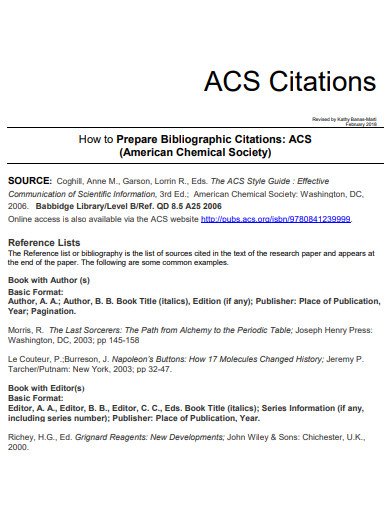
Crafting scientific communication demands precision, not just in your research, but in how you acknowledge the intellectual lineage of your work. Mastering Citing Sources Manually in ACS Style is a fundamental skill for any scientist, ensuring your papers are credible, traceable, and respected within the chemistry community. It's more than just following rules; it's about joining a global conversation with integrity and clarity.
Think of yourself as a meticulous archivist for scientific knowledge. Every claim you make, every piece of data you present that isn't your own original finding, needs a clear, consistent signpost back to its origin. The American Chemical Society (ACS) provides that framework, guiding you through the often-intimidating process of documentation. Forget the fear of confusing commas and misplaced periods—we're here to demystify it all, turning what might seem like a chore into a practiced art.
At a Glance: Your ACS Citation Checklist
Before we dive deep, here’s a quick roadmap to navigating ACS style:
- Choose Your In-Text Style: Decide early whether you'll use superscript numbers, italic numbers in parentheses, or author-year format. Stick with it!
- Sequential vs. Alphabetical: Numbered in-text citations demand a numerically ordered reference list. Author-year citations require an alphabetized reference list.
- Reference List Essentials: Every source cited in your text (and in tables/figures) must appear in your "Cited References" section.
- Completeness is Key: Provide as much information as possible for each source, even for challenging ones like government reports.
- Journal Abbreviations: Use official journal abbreviations to maintain conciseness and consistency.
- Online Access Dates: Always include "(accessed YYYY-MM-DD)" for online sources.
- Avoid Session-Specific URLs: Use stable URLs for subscription sites.
- DOI First: Prioritize Digital Object Identifiers (DOIs) for articles when available.
Why Your Citations Matter (Beyond Avoiding Plagiarism)
Before we dissect the "how," let's quickly touch on the "why." While avoiding plagiarism is paramount, ACS citations serve several critical functions, as outlined in "The ACS Style Guide: Effective Communication of Scientific Information" (2006) and the "ACS Guide to Scholarly Communication":
- Legitimacy and Backing: Citations lend authority to your arguments by showing they are built upon established research or data.
- Context and Background: They provide readers with the necessary context, allowing them to trace the intellectual journey and understand the foundational work supporting your claims.
- Showcasing Others' Work: Properly citing acknowledges the contributions of other researchers, fostering a collaborative and respectful scientific community.
- Traceability: A well-cited paper allows readers to easily locate and verify the sources you used, promoting transparency and reproducibility in science.
Understanding these underlying principles makes the meticulous nature of ACS style less arbitrary and more purposeful.
ACS In-Text Citations: Guiding Your Readers Through the Text
Your in-text citations are the immediate pointers within your narrative, directing the reader to the full source details at the end of your document. ACS style offers three distinct formats, and your first crucial decision is to choose one and use it consistently throughout your entire paper.
Your Three In-Text Options:
- Superscript Numbers:
This is perhaps the most common format in chemistry. The citation appears as a small, raised number outside any punctuation at the end of a sentence or clause.
- Example: The catalytic efficiency of the new complex was significantly improved.1
- Multiple Sources: If citing multiple sources at once, list them sequentially: ...has been widely studied.3-5 or ...different approaches.2,7
- Italic Numbers in Parentheses:
This format uses italicized numbers enclosed in parentheses, placed before the punctuation mark that ends the sentence or clause.
- Example: New methodologies have emerged (2).
- Multiple Sources: Similar to superscript, multiple sources are listed with hyphens or commas: ...shows promise (3-5). or ...specific properties (2, 7).
- Author Name and Year:
This format is more verbose but immediately gives the reader a sense of who published the work and when. It appears inside parentheses, before the punctuation mark.
- Single Author: (King, 2018)
- Two Authors: (King and Chen, 2019)
- Three or More Authors: (King et al., 2018) – Note the use of "et al." (Latin for "and others") for three or more authors.
- Example: The latest findings corroborate previous studies (King et al., 2018).
Key Rules for In-Text Consistency:
- Sequential Numbering (for Superscript/Italic): If you opt for superscript or italic numbers, assign them numerically in the order they first appear in your paper. For instance, the first source you cite is
1, the second is2, and so on. If you cite source1again later, you reuse1. - Reference List Order:
- If using numbered formats (superscript or italic), your reference list at the end of the paper must be in numerical order, directly corresponding to these in-text numbers.
- If using the author name and year format, your reference list should be alphabetized by the authors' last names.
Choosing your in-text style and understanding its implications for your reference list is the first critical step to seamless ACS manual citation.
Building Your Reference List: The Backbone of Your Research
The "Reference List" (or "Cited References," "Literature Cited," or "Bibliography"—any of these headings are acceptable) is where your reader finds the full bibliographic details for every source you've mentioned. This section resides at the very end of your document.
Essential Reference List Principles:
- Comprehensive Coverage: Every single source cited within your main text, including those mentioned in tables or figures, must be listed here. No exceptions.
- Order Matters:
- If your in-text citations use a numbered format, your reference list entries will be numbered sequentially (1., 2., 3., etc.) and correspond to the order of appearance in your paper.
- If your in-text citations use the author name and year format, your reference list entries will be alphabetized by the primary author's last name.
- Accuracy and Detail: This is where the meticulous archivist comes in. Provide as much information as possible for each source. If, for instance, a government publication lacks an explicit author, you simply omit that element but include all other available details.
- Journal Abbreviations: ACS style mandates the use of official journal abbreviations. These can usually be found on the journal's website, in chemical abstracts services (CAS) source lists, or via online databases. Avoid inventing your own abbreviations.
- Online Source Specifics:
- Always include an "(accessed YYYY-MM-DD)" date for online sources. This provides crucial context for information that might change over time.
- For subscription sites (like many journal databases), avoid including session-specific URLs that won't work for other users. Aim for stable, persistent links (like DOIs or journal home page URLs).
Now, let's explore the core citation formats for various source types you'll encounter in scientific writing.
Your ACS Reference Toolkit: Specific Source Formats
Here, we break down the most common types of sources you'll cite, providing the exact ACS format. Pay close attention to punctuation, italics, and spacing—these are not mere suggestions but crucial elements of ACS style.
1. Journal Articles
The bedrock of scientific communication.
Format: Author, A. A.; Author, B. B.; Author, C. C. Title of Article. Journal Abbreviation Year, Volume(Issue Number), Page numbers or Article number (if online only). DOI: 10.xxxx/etc.
- Notes:
- All authors are listed with initials first, then last name, separated by semicolons.
- Article title is in standard font, title case (first word capitalized, then lowercase unless proper noun).
- Journal Abbreviation is italicized.
- Year is bold.
- Volume is italicized.
- (Issue Number) is optional and enclosed in parentheses, not italicized.
- Page numbers or article number follow.
- DOI (Digital Object Identifier) is preferred over a URL if available.
- Example:
Chang, J. H.; Deng, Y. J.; Liu, Z. Z. Asymmetric Synthesis of Chiral α-Amino Acids Using a Stereoselective Electrophilic Amination Reaction. J. Am. Chem. Soc. 2023, 145(12), 6789-6795. DOI: 10.1021/jacs.3c01234.
2. Books with Primary Author(s)
For an entire book written by one or more primary authors.
Format: Author, A. A.; Author, B. B. Book Title, Edition (if any); Publisher: Place of Publication (only required for smaller or specialized publishers), Year. DOI or aggregator URL (for ebook).
- Notes:
- Book Title is italicized.
- Edition information (e.g., "2nd ed.") follows the title.
- Publisher information includes the publisher's name, followed by a colon, then the place of publication. Place of publication is only explicitly required for smaller or specialized publishers; for major academic publishers (e.g., Wiley, Elsevier, Springer), it's often omitted.
- Example (Print):
Atkins, P. W.; de Paula, J. Physical Chemistry, 11th ed.; W. H. Freeman: New York, 2018. - Example (Ebook with DOI):
Smith, J. A.; Jones, B. C. Organic Reactions and Syntheses; Wiley, 2020. DOI: 10.1002/9781119XXXXXX.
3. Authored Chapters in Books with Editor(s)
When you cite a specific chapter written by different authors within an edited collection.
Format: Author, A. A.; Author, B. B. Chapter Title. In Book Title; Editor, A. A., Editor, B. B., Eds.; Series Title (if any), Volume number (if any); Publisher: Place of Publication (optional), Year; Volume number (if any), pp -. DOI or aggregator URL (for ebook).
- Notes:
- "Chapter Title" is in standard font.
- Book Title is italicized.
- Editors are listed with initials and last names, followed by ", Eds."
- Page numbers for the chapter use "pp" for "pages."
- Example:
Chen, L.; Wang, X. Supramolecular Assembly of Functional Materials. In Advanced Materials Chemistry; Miller, R. S., Ed.; Wiley, 2022; pp 145-178. DOI: 10.1002/9781119XXXXXX.
4. Books with Editor(s) (Entire Book)
When the entire book is a collection of chapters by various authors, and you're citing the book as a whole.
Format: Book Title; Editor, A. A., Editor, B. B., Eds.; Series Information (if any, including series number); Publisher: Place of Publication, Year. DOI or aggregator URL (for ebook).
- Example:
Frontiers in Catalysis; Chang, M. L., Lee, S. H., Eds.; ACS Symposium Series 1345; American Chemical Society: Washington, DC, 2023. DOI: 10.1021/bk-2023-1345.
5. Encyclopedia or Handbook Articles (in print)
For articles within a printed reference work.
Format: Article Title. In Encyclopedia Name, Edition number; Publisher: Place of Publication (optional), Year; Volume Number, Page numbers and/or other identifiers.
- Example:
Spectroscopy. In Kirk-Othmer Encyclopedia of Chemical Technology, 5th ed.; Wiley-Interscience, 2007; Vol. 23, pp 607-658.
6. Online Encyclopedias, Handbooks, and Dictionaries
For digital reference works.
Format: Encyclopedia or Handbook or Dictionary Title, edition; Publisher, Posted Online Posting Date (if available). DOI or URL (accessed YYYY-MM-DD). Other identifiers.
- Notes:
- The specific article title within the encyclopedia is often not included if citing the entire work. If you are citing a specific entry, you might adapt the chapter format or website format. The provided ground truth focuses on the entire online encyclopedia.
- The "Posted Online Posting Date" is key if available.
- Example:
Ullmann's Encyclopedia of Industrial Chemistry, 7th ed.; Wiley-VCH, 2023. DOI: 10.1002/14356007. (accessed 2023-10-26).
7. Newspapers and Magazines
For articles from popular press sources.
Format (Print): Author, A. A.; Author, B. B. Article Title. Newspaper Title, Complete Date, Page numbers.
Format (Online): Author, A. A.; Author, B. B. Article Title. Newspaper Title [Online], Complete Date. URL (accessed YYYY-MM-DD). Source/Database (optional, but helpful).
- Notes:
- "Complete Date" means Month Day, Year (e.g., October 26, 2023).
- For online versions, "[Online]" clarifies the medium.
- Example (Print):
Johnson, R. New Battery Breakthrough. The New York Times, October 26, 2023, pp B1, B3. - Example (Online):
Patel, S. Advancements in Green Chemistry. Chemical & Engineering News [Online], October 23, 2023. https://cen.acs.org/articles/99/i1/Advancements-green-chemistry.html (accessed 2023-10-26).
8. Websites
For general websites, blogs, or institutional pages.
Format: Author, A. A. (if any). Title of webpage. Title of website, date of publication/last updated (if available). URL (accessed YYYY-MM-DD), other identifying information.
- Notes:
- If no specific author, omit the author section.
- "Title of webpage" refers to the specific page you are citing.
- "Title of website" refers to the overarching site (e.g., "National Institute of Health").
- Always include the access date.
- Example:
National Institute of Standards and Technology. Spectroscopic Databases. National Institute of Standards and Technology, last updated April 1, 2023. https://www.nist.gov/pml/specdb (accessed 2023-10-26).
9. Government Publications / Technical Reports
For reports issued by governmental agencies or technical organizations.
Format: Author, A. A.; Author, B. B. Title; Agency; Place of Publication, Year; identifying number.
- Notes:
- If no specific author is named, you can sometimes use the agency as the author, or simply start with the title if that's more appropriate and clearly identifies the source. The key is to provide as much information as possible from the available data.
- Title is italicized.
- "Identifying number" refers to report numbers, publication numbers, etc.
- Example:
U.S. Environmental Protection Agency. Analysis of Air Quality in Urban Areas; U.S. Environmental Protection Agency: Washington, DC, 2022; EPA/600/R-22/045.
10. Theses and Dissertations
For unpublished academic research documents.
Format: Author, A. A. Type of Dissertation (e.g., Ph.D. Dissertation), University, Place, Year.
- Example:
Garcia, M. L. Ph.D. Dissertation, University of California, Berkeley, CA, 2021.
11. Patents
For inventions officially granted legal protection.
Format: Author, A. A.; Author, B. B. Title. Patent Number, Date.
- Example:
Davis, K. L.; Wilson, P. R. Catalyst for Polymerization. U.S. Patent 10,123,456, November 15, 2020.
Navigating Tricky Waters & Common Pitfalls
Even with clear formats, manual citation can present challenges. Here’s how to handle common scenarios:
- Missing Information: The ground rule is always "include as much information as possible." If a piece of data (like an author) is genuinely unavailable, omit it and proceed with the next available element. Don't invent information.
- DOIs vs. URLs: Always prioritize the Digital Object Identifier (DOI) for journal articles and book chapters when it's available. A DOI is a permanent link to the content, whereas a URL can change. If no DOI, then use a stable URL.
- Session-Specific URLs: Be vigilant about URLs from subscription databases. Some URLs contain session IDs that expire or are unique to your login. Always try to find a "persistent link," "stable URL," or simply the journal/book's homepage URL for a more reliable path to the content.
- Consistency, Consistency, Consistency: We can't stress this enough. If you cite "King et al." in one instance for a specific paper, don't switch to "King, Chen, and Lee" for the same paper later. If you use superscript
1for a source, always use1for that source.
Beyond the Basics: Tips for Precision and Efficiency
While manual citation is a fundamental skill, efficiency helps.
- Create Your Own Templates: For each common source type, create a blank template (like the formats provided above) and fill it in as you go. This minimizes errors and speeds up the process.
- Cite As You Go: Don't wait until the end of your writing process to compile your citations. As soon as you integrate information from a source, create its in-text citation and add it to your working reference list. This prevents omissions and reduces stress.
- Proofread Meticulously: After you've finished your paper, dedicate time to proofread your citations. Check every comma, period, italicization, and bolding. Small errors can detract from your professionalism. A trick: print out your reference list and read it backward. This helps catch mistakes you might overlook when reading forwards.
- Leverage Tools When Appropriate: While this guide focuses on manual citation, understanding the rules empowers you to use tools more effectively. For checking complex lists or ensuring compliance across a large document, you might find that an online resource can generate ACS references for you, but knowing the underlying structure is essential for verifying their output. Always double-check automatically generated citations against the official ACS guidelines, as tools aren't infallible.
Your Next Steps to Citation Confidence
Mastering ACS style isn't about rote memorization; it's about developing an eye for detail and a systematic approach. With practice, the seemingly complex structure will become second nature, allowing you to focus on the science itself.
Start by consistently applying one in-text citation method. Then, as you incorporate sources, meticulously build your reference list using the formats outlined here. Think of each citation as a small act of scholarly responsibility, connecting your work to the broader scientific dialogue. Your readers, and the scientific community, will thank you for the clarity and precision you bring to your communication. Good luck, and happy citing!